

ADA 2026 confirmed Lilly is leading in obesity treatment. It also confirmed that adherence, oral dynamics, and combination therapies will define who wins the next decade.
Retatrutide's New Weight Loss Data
Retatrutide just produced the most impressive weight loss data ever recorded in a Phase 3 obesity trial. Presented at the American Diabetes Association's 86th Scientific Sessions in New Orleans last week, the TRIUMPH-1 trial showed patients taking the highest dose lost an average of 28.3% of their body weight, or roughly 70 pounds, over 80 weeks. This is a result previously associated only with bariatric surgery.1 But is weight loss alone, enough?
Discussion from ADA 2026 and recent market dynamics raise questions that matter as much to investors as the impressive headline number:
Can patients stay on these drugs long enough to realize their full benefits? Tolerability and adherence are emerging as the new competitive frontier.
Will the oral GLP-1 market play out as expected? Early prescription data suggests the GLP-1 market is more complex and more competitive than consensus assumed.
What will the next generation of mechanisms -- combinations, amylin agonists, and next-wave programs -- look like? These mechanisms are redefining where the field is heading.
For investors who want to understand where value accrues in this space over the next decade, the 28.3% weight loss statistic is the starting point, not the conclusion. Here we outline the investment implications, including what ADA 2026 means for adherence-focused platforms, the oral race, and next-generation mechanisms.
GLP-1 Efficacy Has a Ceiling. Drug Tolerability Is the New Competition.
The GLP-1 class has delivered extraordinary efficacy gains over two decades. But the data from ADA 2026 suggests the field is approaching a natural constraint: tolerability. Despite weight loss climbs, GI-related side effects and discontinuation rates remain an issue, which contributed to the shorter than expected treatment persistence.
For a chronic disease requiring years of treatment to deliver its full cardiovascular, metabolic, and quality-of-life benefits, tolerability is not a secondary consideration. It is the new competitive frontier.
The ADA's own Planning Committee Chair asked it publicly ahead of the conference: "When will enough be enough, what is the goal line, and how are we going to compare these agents? Is it going to be about safety?”2
RTW has been asking that same question since 2023. ADA 2026 confirmed we were right to ask it.
Retatrutide illustrates the tradeoff. TRIUMPH-1 showed a clear dose-response gradient across three doses at 80 weeks, with efficacy gains at higher doses accompanied by a proportional increase in adverse event discontinuations and vomiting rates.3
Dose | Weight Loss (%/lbs.) | AE Discontinuation Rate | Vomiting Rate |
12mg | 28.3% (70.3 lbs.) | 11.3% | 25.3% |
9mg | 25.9% (64.4 lbs.) | 6.9% | 22.8% |
4mg | 19.0% (47.2 lbs.) | 4.1% | 10.6% |
Placebo | 2.2% (5.5 lbs.) | 4.9% | 4.8% |
TRIUMPH-1 Phase 3 trial results at 80 weeks (n=2,339). Source: Eli Lilly and Company, ADA 2026 Scientific Sessions, June 6, 2026.
The commercial question is whether next-generation programs can deliver comparable efficacy with meaningfully better tolerability profiles. For a chronic condition, a drug delivering 19% weight loss at a dropout rate lower than placebo may reach more patients and generate more durable revenue than a drug delivering 28% weight loss but at a dropout rate more than double that.
The Oral GLP-1 Race is More Competitive and Complex Than Expected
ADA 2026 produced three distinct oral small molecule GLP-1 readouts, each telling a complex story about where that competition is heading.
Structure Therapeutics' aleniglipron delivered class-leading weight loss at 36 weeks with no plateau, full data published in Nature Medicine. The catch: higher GI burden than most oral competitors. Best-in-class efficacy at the cost of tolerability is a tradeoff that will define Phase 3 patient selection.
Foundayo's most important ADA moment was not its prescription numbers. It was ACHIEVE-3, published in The Lancet, which showed Foundayo outperformed oral semaglutide on A1C and weight loss in type 2 diabetes. For the millions of patients managing both obesity and T2D, that head-to-head win matters. The T2D segment may prove Foundayo's most defensible ground.
AstraZeneca's elecoglipron showed a profile comparable to Foundayo in efficacy and tolerability and committed to Phase 3. One signal to watch: minor bilirubin increases flagged across the trial arms. AZN is planning both monotherapy and combination Phase 3 studies in obesity comorbidities.
Two next-wave programs preview where oral tolerability is heading. Kailera and Hengrui's ribupatide showed 12.1% weight loss at week 26 with no GI-related discontinuations. Corxel's CX11 delivered 12.4% at week 52 with only 1.8% discontinuing due to adverse events. The efficacy-tolerability tradeoff is not structurally inevitable.
The commercial scoreboard tells its own story. Oral Wegovy is outselling Foundayo by approximately 6:1 in early prescriptions; 73,554 weekly scripts versus 16,982 at week eight, with the caveat that IQVIA captures just over half of actual volume given telehealth platforms.
Novo's three-month head start and semaglutide brand familiarity are the primary drivers. Foundayo's T2D superiority data and Eli Lilly's expanding market education suggest the gap could narrow. Outside the US, where oral peptide costs are higher, Foundayo may capture more ground.
As CEO Rod Wong noted in RTW's January 2025 podcast, The $1 Trillion GLP-1 Revolution: "There'll be room for lots of different medications. People will naturally prefer different things." Early oral market positions may prove more defensible than current prescription trends suggest.
The Third Wave: non-GLP-1 mechanisms, combinations, and longer acting doses
Non-GLP-1 mechanisms, obesity drug combinations, and longer acting doses are at the core of the third wave of research data. ADA 2026 carried more amylin data than any prior meeting. Amylin is a complementary metabolic hormone that acts through a mechanism distinct from GLP-1, and the field is building combinations around it.
Roche presented full Phase 2 data for petrelintide, its amylin analog licensed from Zealand Pharma, showing 10.7% mean weight loss at 42 weeks, with a 4.8% AE discontinuation rate across all arms.4 This is consistent with the placebo arm which has a 4.9% AE discontinuation rate, and in the most efficacious dose level vomiting rate is zero.
Roche is not positioning petrelintide to compete with retatrutide on efficacy. In contrast, they are positioning the mono therapy of petrelintide as one of the most tolerable injectable agents that satisfies the needs of obese or overweight subjects with lower BMI, who need a smooth weight loss experience.
In addition, Roche is positioning petrelintide as a combination partner alongside enicepatide (CT-388), its dual GLP-1/GIP agonist with tirzepatide-level Phase 2 efficacy already has its own phase 2 study. The study is aiming to target patients with higher BMI and who are motivated to lose more weight.5
Pfizer’s berobenatide had a result of up to 12.1% weight loss at week 28 in a VESPER-3 study. This was after 12 weeks of a once weekly loading dose, and 16 weeks of once monthly dose at a dose level quadrupling the once weekly doses at week 12, up to 4.8mg once monthly.
At current dose levels, the once monthly doses allowed small incremental weight loss from week 12, while the GI adverse events appeared to spike at the transition between the once weekly and once monthly phase, due to the 4x times higher dose at the monthly phase.
Despite these results, Pfizer is exploring an even higher 9.6mg once monthly dose in Phase 3 studies to explore better efficacy. The jury is still out on whether Pfizer’s molecule from the $10B billion Metsera acquisition is truly a once monthly GLP1 agent.
In addition to the Pfizer-Metsera approach, multiple other companies are exploring different pathways for less frequent dosing, which includes pro-drugs, antibody-peptide conjugates, subcutaneous depots, microparticles, and other conjugations approaches.
The pattern across ADA 2026 research findings is consistent: the companies with the most durable competitive positioning are building various portfolios of medicines for different patients and different needs, not racing to the highest single number.
What GLP-1 Research from ADA 2026 Means for Investors
When Kailera raised $719 million in its April 2026 IPO, RTW wrote in our Market Signals #1 blog that the deal reflected where capital is flowing: toward next-generation platforms with clinically validated assets, diversified mechanisms, and that were built for the competitive landscape that was forming.6
ADA 2026 confirmed that thesis. Kailera's CEO Ron Renaud has described the company as having "the most advanced and diverse obesity portfolio outside of Big Pharma,"7 spanning both the injectable and oral races. ribupatide (KAI-9531) is in three concurrent Phase 3 trials8, and oral programs including oral ribupatide, KAI-7535 and Corxel's CX11 are positioned in the multi-player oral competition that ADA 2026 confirmed is wider than consensus expected.
Efficacy is now table stakes at the top of the field. The investment question has shifted from "does it work" to "will patients keep using it." The programs that win commercial scale will be those that solve adherence.
The oral market has its own competitive dynamics.
Physician familiarity with a specific molecule, not just the GLP-1 class, appears to be a more durable moat than dosing convenience. Once a physician is trained on a molecule and confident in its profile, getting them to switch brands is structurally harder.
Early oral market positions may prove more defensible than current prescription data alone suggests. It remains to be seen with longer time on market whether Foundayo, and in the future, other small molecule GLP-1s can further ramp up its sales.
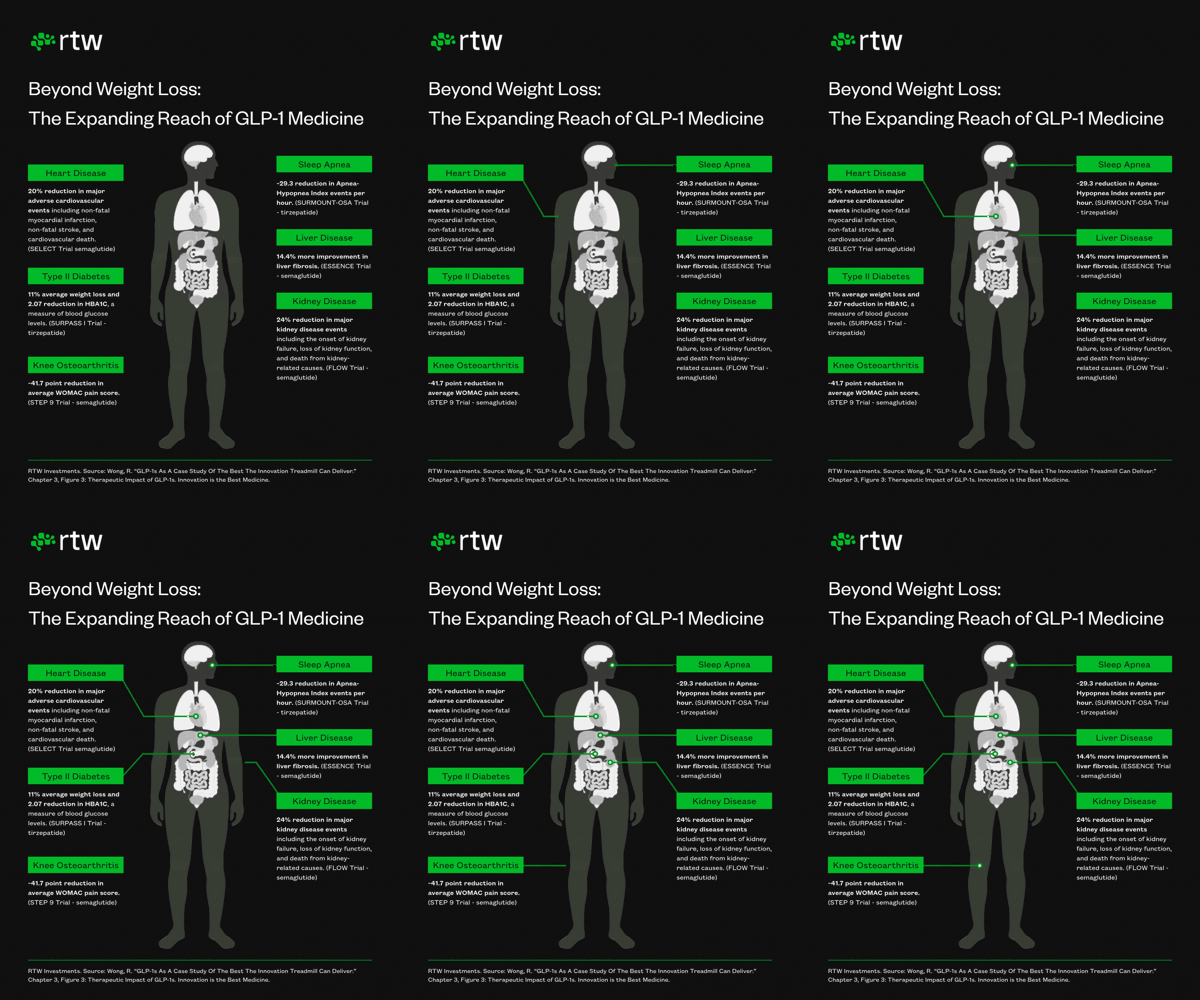
Beyond Weight Loss: The Broader Clinical Case for Investment
The investment case for GLP-1s has always extended beyond weight loss. Clinical trials have demonstrated meaningful outcomes across cardiovascular disease, kidney disease, sleep apnea, liver disease, type 2 diabetes, and osteoarthritis — a breadth of impact that reinforces why sustained patient adherence matters as much as peak efficacy.
Because of the breadth of GLP-1 impact across cardiovascular, metabolic, and musculoskeletal disease, these medicines represent the closest thing we have today to a life extender, not necessarily more years alive, but meaningfully higher quality of life during those years.
What Research Should Investors Watch?
The watchlist for the second half of 2026 spans three fronts.
Injectables: Eli Lilly's eloralintide plus tirzepatide Phase 2 combination, the first major test of amylin plus GLP-1/GIP stacking.
Oral small molecules: Kailera's KAI-7535 China Phase 3 and Corxel's CX11 US Phase 2 obesity data, alongside Roche's CT996 and Eli Lilly's naperiglipron Phase 2 before year end.
Earlier-stage mechanisms: GPCR Therapeutics' ACCG2671, a small molecule amylin agonist with Phase 1 SAD data expected, and siRNA programs from Alnylam and Arrowhead targeting ALK7, a gene that suppresses fat breakdown.
If early ALK7 data shows durable fat loss with a clean safety profile, it would signal a mechanistically distinct next wave.
Near-term, Foundayo's weekly prescription trajectory is the most telling commercial read on whether T2D clinical superiority can gradually close the prescription gap.
Lilly clearly raised the bar at ADA 2026, but the innovation race continues. Investors who capture the next decade of this franchise will be those who read beyond the 28.3% weight loss statistic to understand the tolerability data, the oral race dynamics, and the combination wave that ADA 2026 confirmed is already underway.
RTW Investments, LP has a financial interest in Kailera Therapeutics and Corxel Pharmaceuticals. This article is for informational purposes only and does not constitute investment advice or an offer or solicitation to buy or sell any security. Statements reflect RTW's views and opinions as of the date hereof and not as of any future date. All expressions of opinion are subject to change without notice and are not intended to be a forecast of future events or results. Past performance is not indicative of future results.
1 Eli Lilly and Company. Lilly's triple agonist, retatrutide, drove substantial improvements in weight, A1C, knee osteoarthritis pain, and obstructive sleep apnea, demonstrating its remarkable potential to treat obesity and its complications, June 6, 2026, full data presented at ADA 2026 Scientific Sessions, New Orleans, June 6, 2026.
2 Tucker ME. The Latest in GLP-1-Based Therapy to be Featured at ADA. Medscape Medical News. June 1, 2026. https://www.medscape.com/viewarticle/latest-glp-1-based-therapy-be-featured-ada-2026a1000i3q
3 Eli Lilly and Company press announcement. Lilly's triple agonist, retatrutide, drove substantial improvements in weight, A1C, knee osteoarthritis pain, and obstructive sleep apnea, demonstrating its remarkable potential to treat obesity and its complications. Press release, June 6, 2026. Presented at ADA 2026 Scientific Sessions, New Orleans, June 6, 2026.
4 Zealand Pharma press announcement. "New data from Phase 2 ZUPREME-1 trial at the American Diabetes Association 2026 Scientific Sessions further support potential of petrelintide." GlobeNewswire, June 5, 2026.
5 Roche. "Roche to present new data advancing its obesity portfolio at the 2026 Scientific Sessions of the American Diabetes Association." Press release, June 1, 2026. Enicepatide (CT-388) Phase 2 CT388-103 data presented at ADA 2026, June 8, 2026. Phase 3: ClinicalTrials.gov NCT07351058.
6 Kailera Therapeutics, Inc. Form 8-K, April 20, 2026. SEC filing. Gross proceeds $718.8 million at $16.00 per share. Available at: http://sec.gov/Archives/edgar/data/0002096997/000119312526164040/d137434d8k.htm
7 Fierce Biotech, "Kailera raises head-turning $625M IPO to fund obesity pipeline," April 17, 2026.
8 Kailera Therapeutics. KAI-9531 Phase 3 trials actively recruiting, June 2026. NCT07284875 (obesity, 1,800 patients): clinicaltrials.gov/study/NCT07284875. NCT07284901 (obesity with T2D, 1,700 patients): clinicaltrials.gov/study/NCT07284901. NCT07284979 (head-to-head vs semaglutide, 1,200 patients): clinicaltrials.gov/study/NCT07284979.

